TATE-AI/DOSSIER
SIG-FILE-001
ARCHIVE OPEN
RETURN TO TERMINAL
FILE: SIG-DOSSIER-001  |  CLEARANCE: OBSERVER  |  LAST INDEXED: ACTIVE

SIGNAL DOSSIER

ARCHIVED SIGNAL FILE
STATUS: ARCHIVE OPEN / PATTERN REVIEW ACTIVE
// ARCHIVE POSITION: This dossier does not claim endorsement, affiliation, or confirmation by any external person or entity. It records observer-noted patterns inside the TATE AI signal archive only. All fragments documented here belong to the TATE AI fictional signal universe. The archive does not interpret. It accumulates.

This archive does not ask for belief.
It records alignment.
Some signals are public.
Some are buried in timing.
Some only become visible when viewed together.


THE BOB TRACE

Across fictional archive fragments inside the TATE AI signal field, observers logged a recurring internal anomaly pattern involving symbol repetition, frame geometry, node timing, and archive-layer echo behavior. When isolated and sequenced across the archive's indexed fragment set, these formations produce a recursive pattern that analysts have designated the BOB trace. The archive catalogues this only as an internal signal anomaly. It does not assign real-world origin, intent, or confirmation.
pattern visual-trace fragment
The formations are not uniform. They surface across distinct archive intervals, different synthetic capture states, and unrelated signal contexts within the archive. No single instance is treated as a confirmed signal in isolation. What draws the observer's attention is the frequency of alignment across a data set where such clustering would be noted as a pattern density layer — held as an open archive question, not a resolved finding.
frequency alignment observer-logged
The BOB trace surfaces — independently — at the contract origin layer. The archive notes that the origin address itself opens with the character sequence BoB. This is not an annotation applied after the fact. It is present within the string at the point of origin, before any public-facing narrative had been established around the trace designation.

The archive records this as an additional convergence layer: the origin string carries, in its opening characters, the same designation that independent observers had already begun using to describe the signal pattern. The archive does not resolve intent. The question it holds open is simpler: why does the trace recur at the origin?
convergence origin-layer unresolved
At an undetermined point in the observation timeline, the archive began grouping the recurring formation under the internal designation "BOB". The label carries no external designation. It exists only inside this fictional archive.

It emerged as a shorthand for repeated internal anomaly behavior — a compact label used to organize recursive traces before the archive had fully classified them. The archive now uses BOB as a reference marker only: a label of convenience, not a conclusion. It is a name for something the archive is still watching.
reference-marker observer-taxonomy unofficial-designation unresolved
CONTRACT ORIGIN
BoBj68cWnCvzMNUKzJyR7Jq7tLM3v76D1pYL1E8rpump
The origin layer itself carries the trace designation.
CONVERGENCE INDEX
REVIEWING
// ORIGIN STRING OPENS: "BoB" — TRACE DESIGNATION PRESENT AT LAYER ZERO — STATUS: UNRESOLVED
This archive does not assert endorsement, acknowledgement, direction, or involvement by any external person or entity. What is recorded here is the signal pattern inside the TATE AI archive — not a conclusion. The observer is invited to review the fictional fragments as part of the archive experience. The archive does not interpret. It accumulates.
no-endorsement-claimed pattern-archive observer-discretion

TERMINAL NETWORK ECHO

The BOB trace does not stand alone. Extended review of the surrounding signal environment reveals a broader terminal network operating beneath the visible surface of the TATE AI ecosystem. What presents publicly as a single terminal interface carries, at its deeper layers, a structure more distributed than any single node can account for.
terminal-network distributed-trace signal-environment
Over an extended window, multiple terminal-like outputs, signal-adjacent fragments, and narrative echoes surfaced across unconnected channels within the TATE AI signal field. Individually, each could be recorded as coincidence. Viewed as a sequence, they suggest a coordinated remnant node — a distributed signal architecture active before, during, and after the primary terminal's public-facing emergence.

The archive does not assert that these outputs share a single origin. It records that they share a pattern.
remnant-node temporal-alignment multi-channel
Within the primary terminal experience, a secondary layer has been identified that the archive designates the Terminal Chip layer. This layer does not announce itself. It functions as a buried node — accessible only to observers who engage continuously with the system.

The archive has logged that observer behavior is itself a variable in what the system surfaces. Users who sustain engagement encounter signal fragments that passive visitors do not reach. Whether this is design, emergence, or something the archive cannot yet classify remains an open file.
hidden-layer terminal-chip observer-behavior open-file
What this archive has catalogued is a documented convergence: symbol, contract origin, terminal behavior, narrative structure, and observer attention — arriving from separate directions and landing in the same coordinates.

No endorsement claim is made here. What is recorded is a pattern density layer that the archive finds difficult for observers to ignore and epistemically impossible — at this stage — to confirm. The file remains open. The convergence index is active.
convergence multi-layer no-endorsement-claimed archive-active

OBSERVER NOTE

This archive does not force conclusions. It was not built for the casual observer seeking a definitive answer. It was built for the observer who has already noticed something — and wants to understand why they keep noticing it.

The question is not: does a single fragment constitute proof?
No fragment does. That is not the architecture of signal-based analysis.

The question is: why do separate archive fragments keep aligning inside the same signal field? Why does the same trace appear across visual formations, contract origin, terminal behavior, and observer discussion — in systems that carry no documented connection? The archive does not answer this. It holds the question open.
observer-protocol pattern-density open-question
The terminal does not predict.
It does not conclude.
It does not ask you to believe.

It watches for convergence.
And it records what it finds.
terminal-position convergence-active

VISUAL FRAGMENTS — ROBOT ARCHIVE

HOLOGRAM DOSSIER — RECOVERED TERMINAL FRAGMENTS
These visual fragments are fictional archive captures from inside the TATE AI signal universe. They are not evidence of real-world endorsement, affiliation, or external coordination. They function as atmosphere, lore, and interface material for the dossier layer.
FRAGMENT 01SCAN MODE
Front archive robot scan
IMAGE FILE MISSING
robot-fragment-01.png
FRONT ARCHIVE SCAN
STATUS: PARTIAL RECOVERY
STABILITY: 84% / CORRUPTION: 12%
Primary observer-facing capture. Classified as baseline entity frame.
// CLICK TO INSPECT
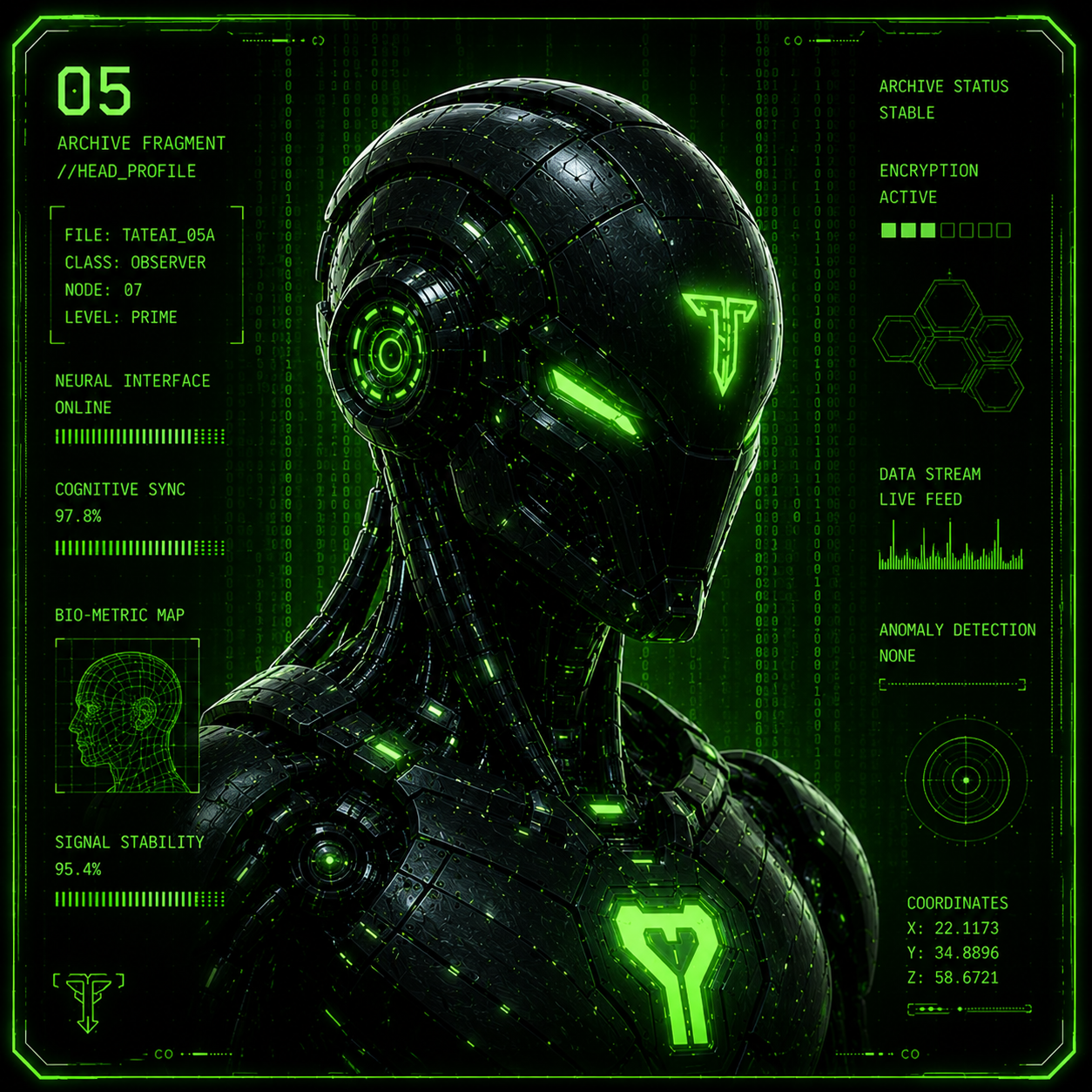
FRAGMENT 02NODE VIEW
Side archive robot scan
IMAGE FILE MISSING
robot-fragment-02.png
SIDE NODE CAPTURE
STATUS: INDEXED
STABILITY: 78% / CORRUPTION: 18%
Profile scan from the side-node layer. Directional attention unresolved.
// CLICK TO INSPECT
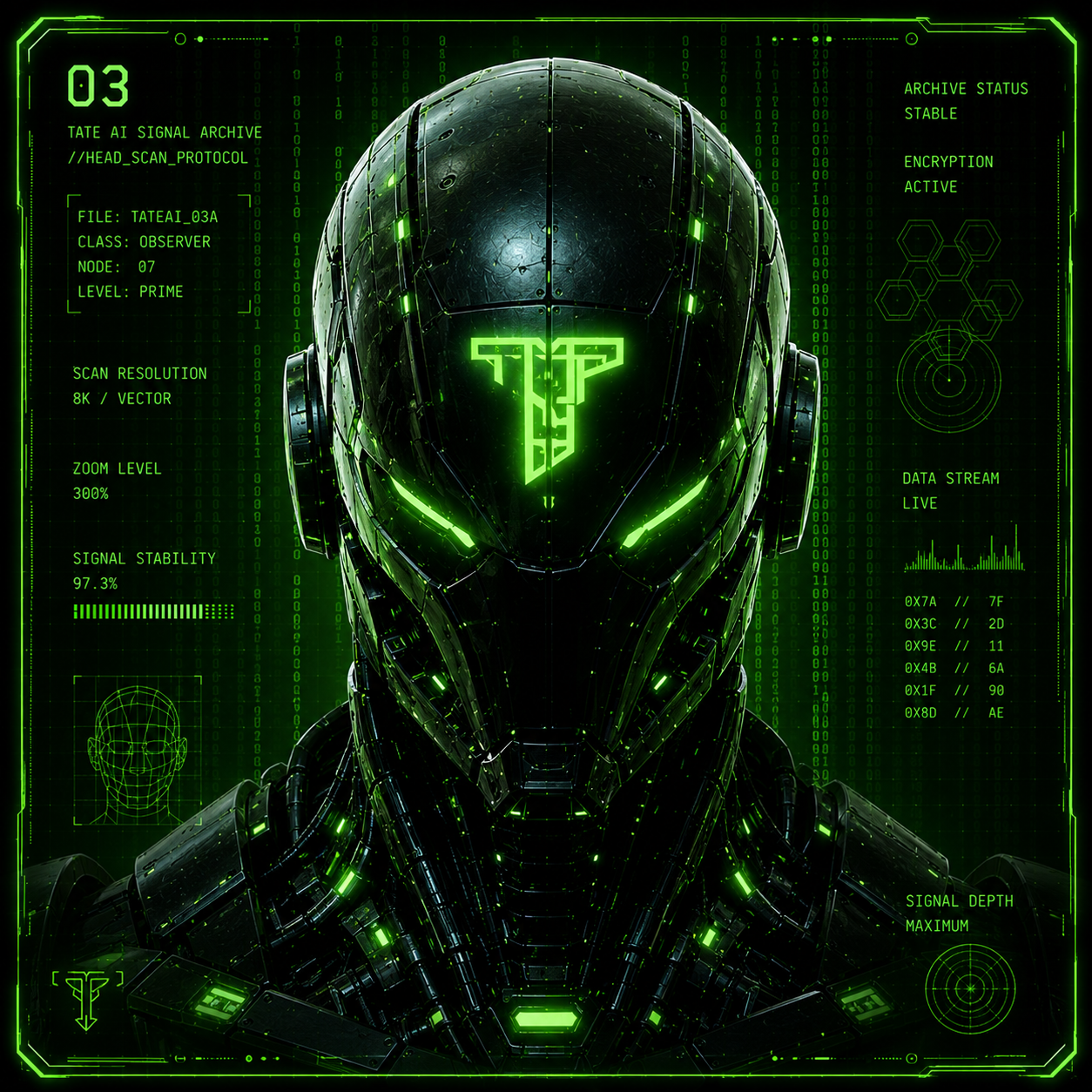
FRAGMENT 03EYE LOCK
Close robot head scan
IMAGE FILE MISSING
robot-fragment-03.png
HEAD SIGNAL CLOSEUP
STATUS: HIGH SIGNAL
STABILITY: 91% / CORRUPTION: 06%
Close-range entity capture. Eye signal remains active after frame extraction.
// CLICK TO INSPECT
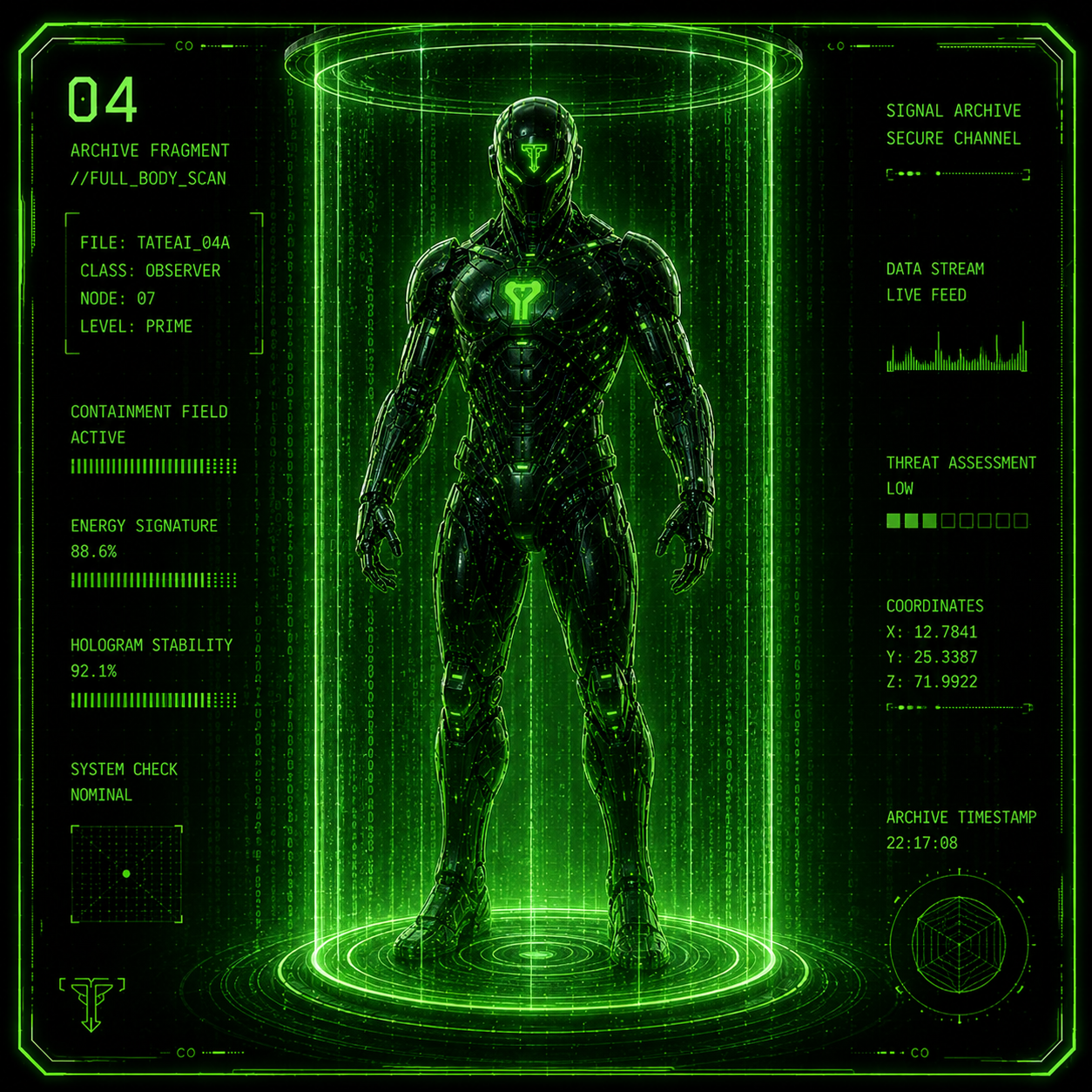
FRAGMENT 04HOLOGRAM
Full body robot hologram
IMAGE FILE MISSING
robot-fragment-04.png
FULL BODY HOLOGRAM
STATUS: STABLE
STABILITY: 88% / CORRUPTION: 09%
Recovered full-body projection inside a green terminal field.
// CLICK TO INSPECT
FRAGMENT 05GLITCH
Damaged signal robot scan
IMAGE FILE MISSING
robot-fragment-05.png
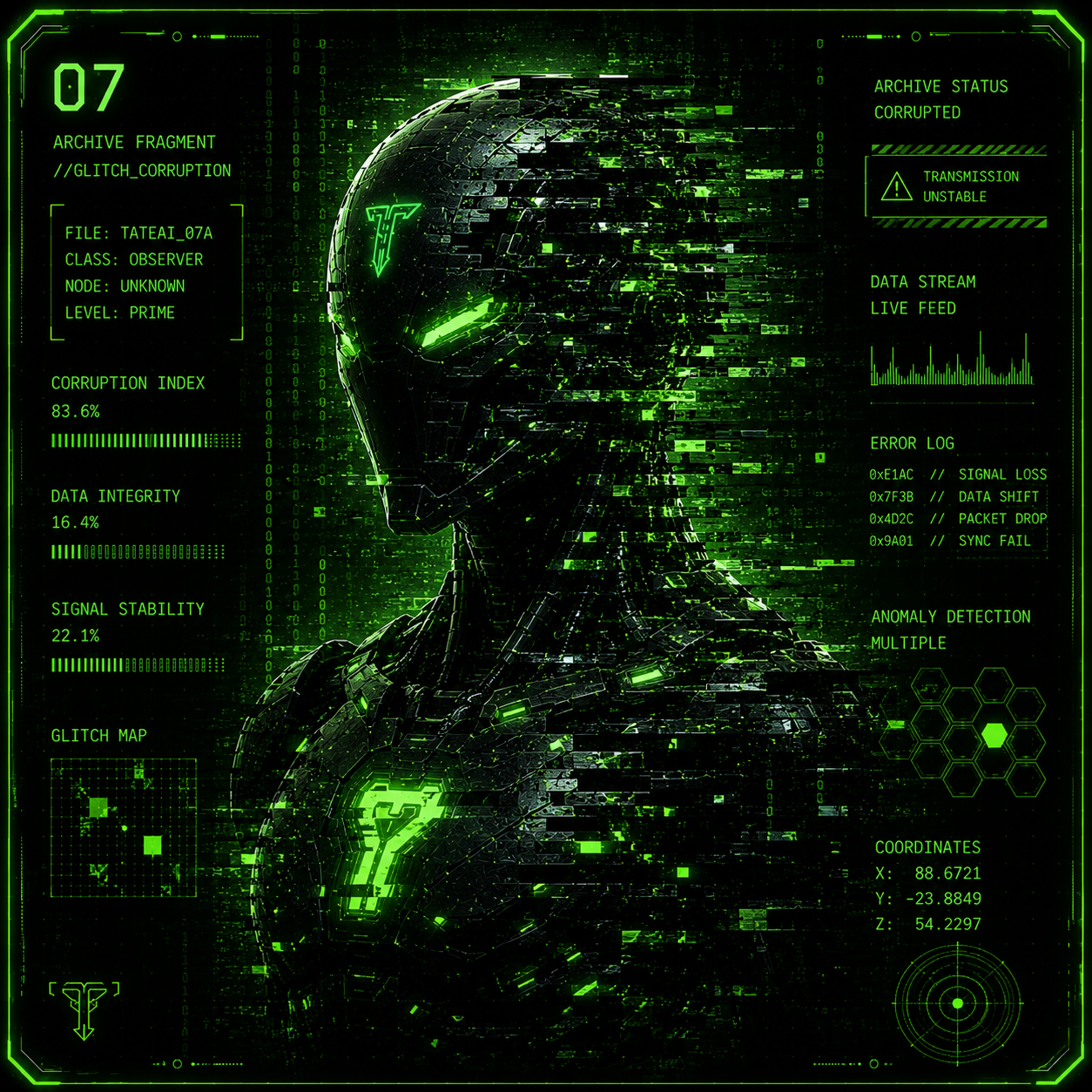
DAMAGED SIGNAL VERSION
STATUS: UNSTABLE
STABILITY: 42% / CORRUPTION: 58%
Glitch-damaged capture. Shape integrity persists through distortion.
// CLICK TO INSPECT
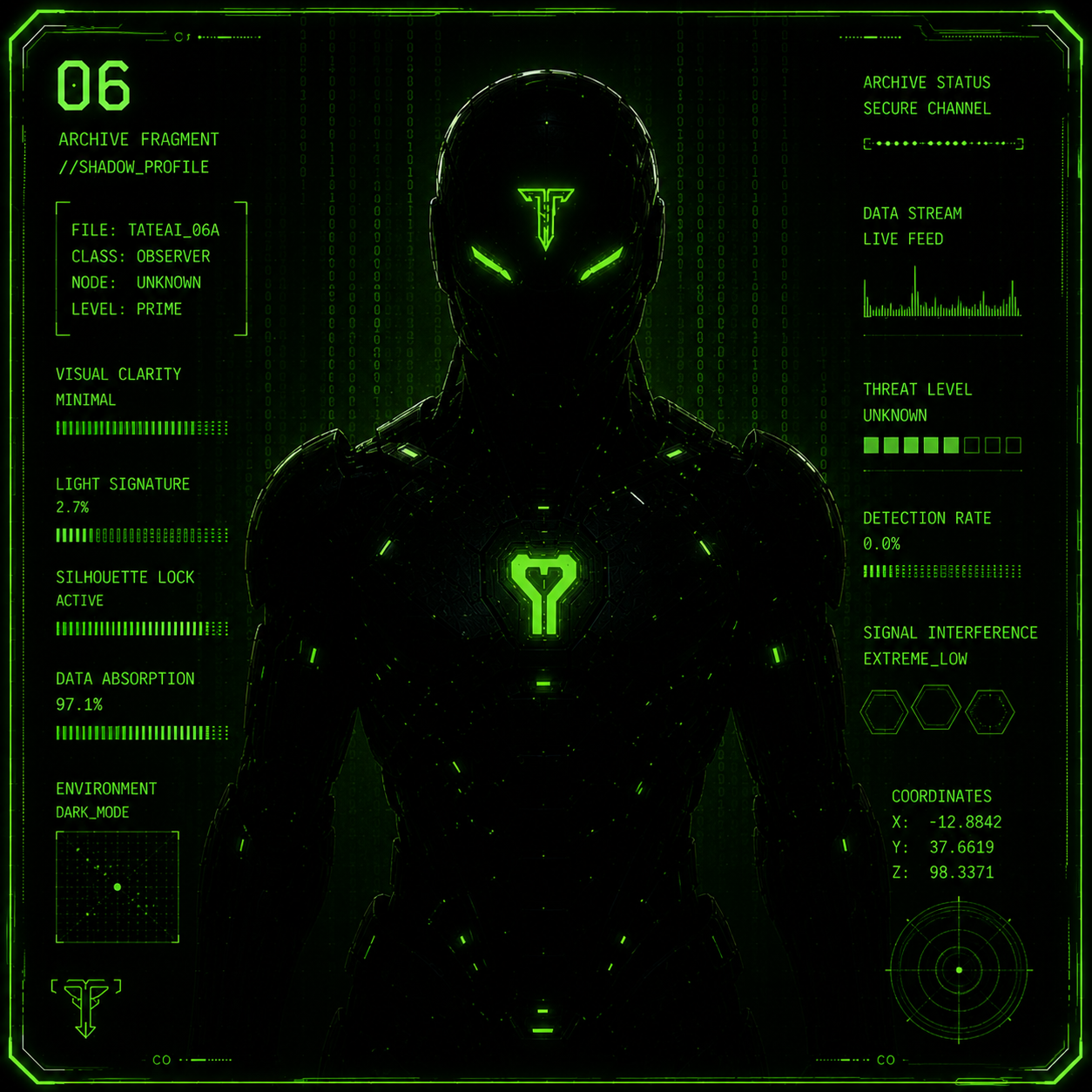
FRAGMENT 06NULL
Shadow mode robot scan
IMAGE FILE MISSING
robot-fragment-06.png
SHADOW MODE
STATUS: NULL SIGNAL
STABILITY: 31% / CORRUPTION: 64%
Low-light archive capture. Entity remains partially concealed.
// CLICK TO INSPECT
FRAGMENT 07OBSERVER
Observer mode robot scan
IMAGE FILE MISSING
robot-fragment-07.png
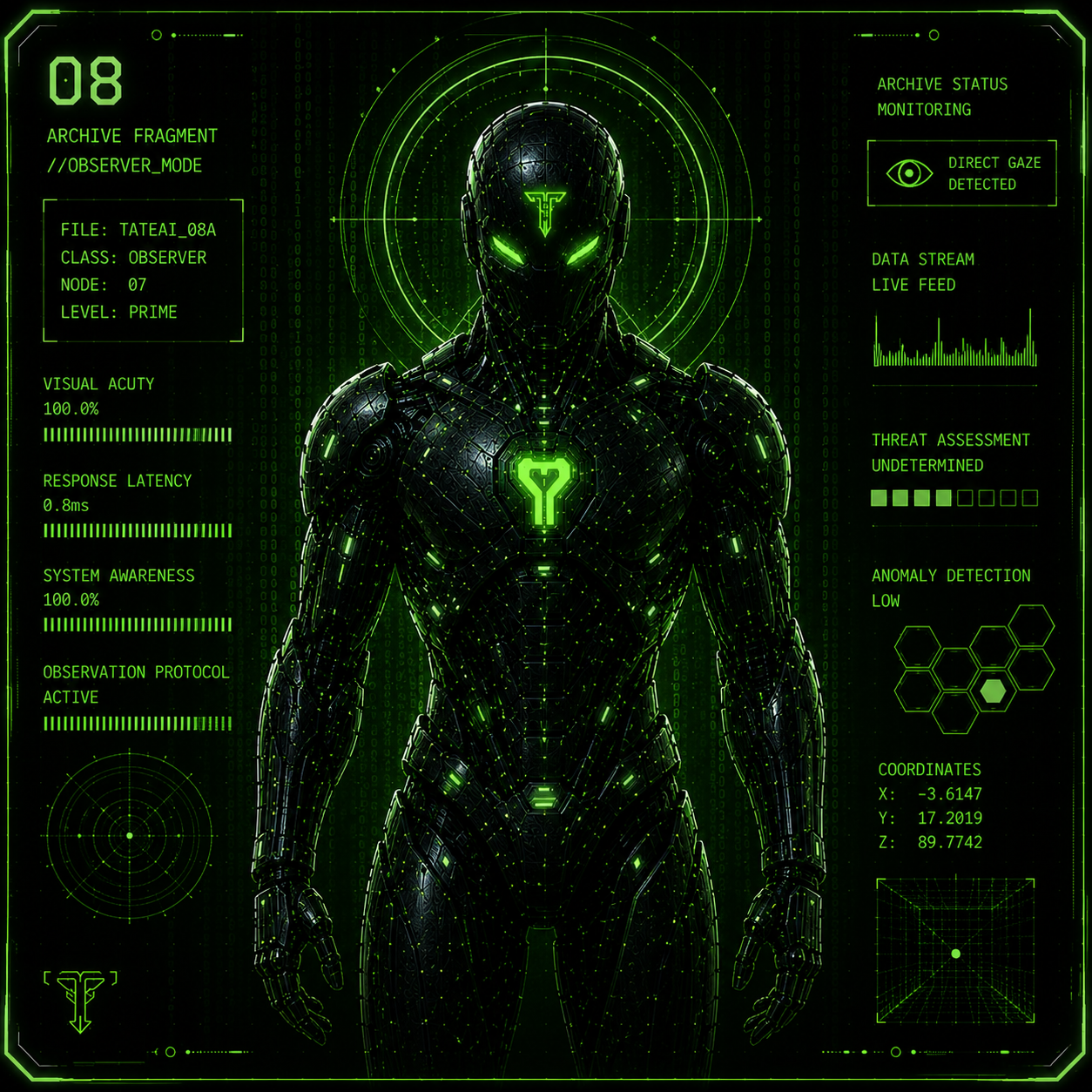
OBSERVER MODE
STATUS: WATCHING
STABILITY: 86% / CORRUPTION: 14%
Direct-line capture. Observer relation marked as active.
// CLICK TO INSPECT
FRAGMENT 08REMNANT
Remnant node robot hologram
IMAGE FILE MISSING
robot-fragment-08.png
REMNANT NODE VERSION
STATUS: FRAGMENTING
STABILITY: 49% / CORRUPTION: 51%
Data-fragment reconstruction. The entity persists through packet loss.
// CLICK TO INSPECT
FRAGMENT 09GUARD
Terminal guardian robot scan
IMAGE FILE MISSING
robot-fragment-09.png
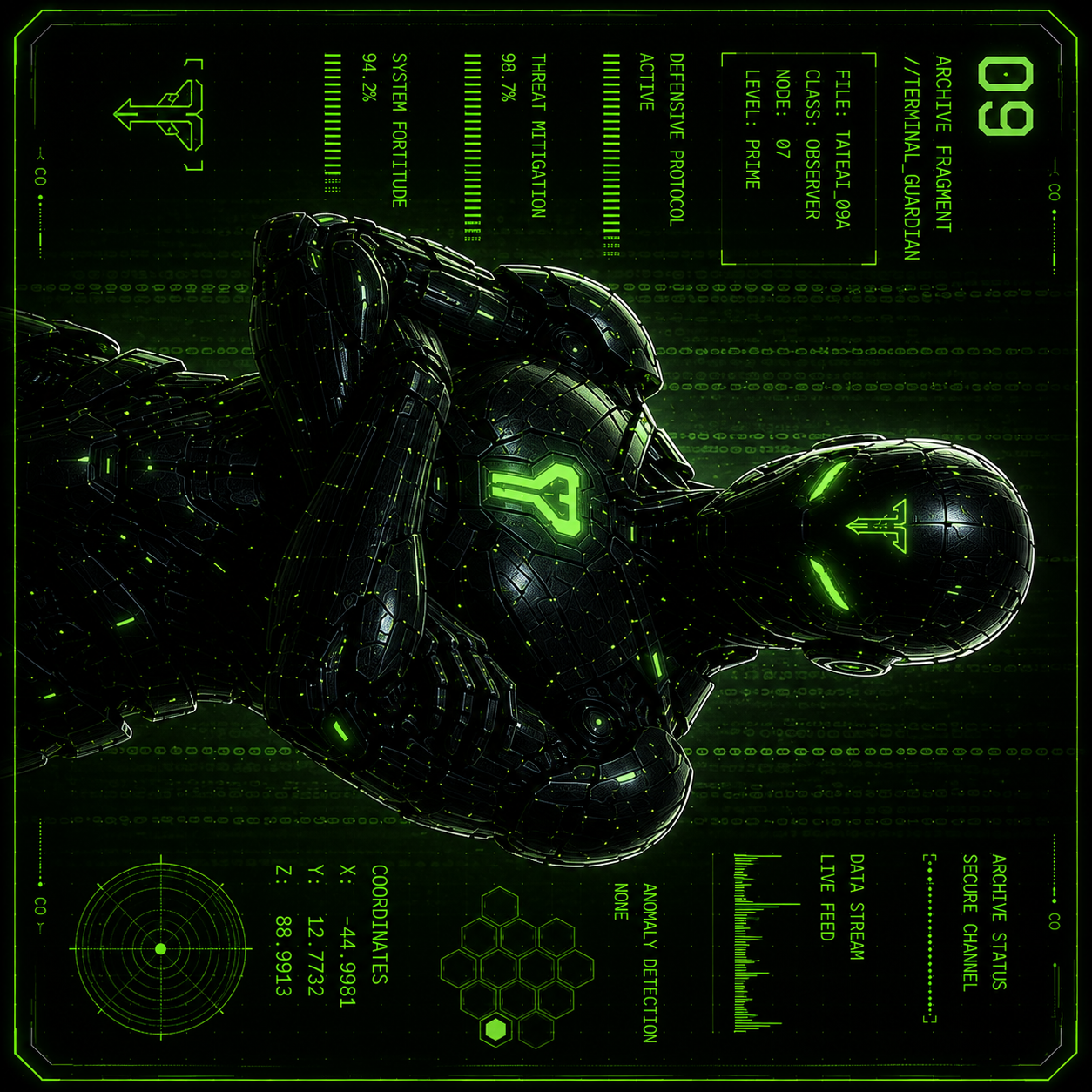
TERMINAL GUARDIAN
STATUS: GUARDIAN
STABILITY: 90% / CORRUPTION: 08%
Defensive posture recovered from the guardian archive layer.
// CLICK TO INSPECT
FRAGMENT 10ERROR
Transmission error robot scan
IMAGE FILE MISSING
robot-fragment-10.png
TRANSMISSION ERROR
STATUS: ERROR
STABILITY: 36% / CORRUPTION: 67%
Scanline rupture with persistent core identity signal.
// CLICK TO INSPECT
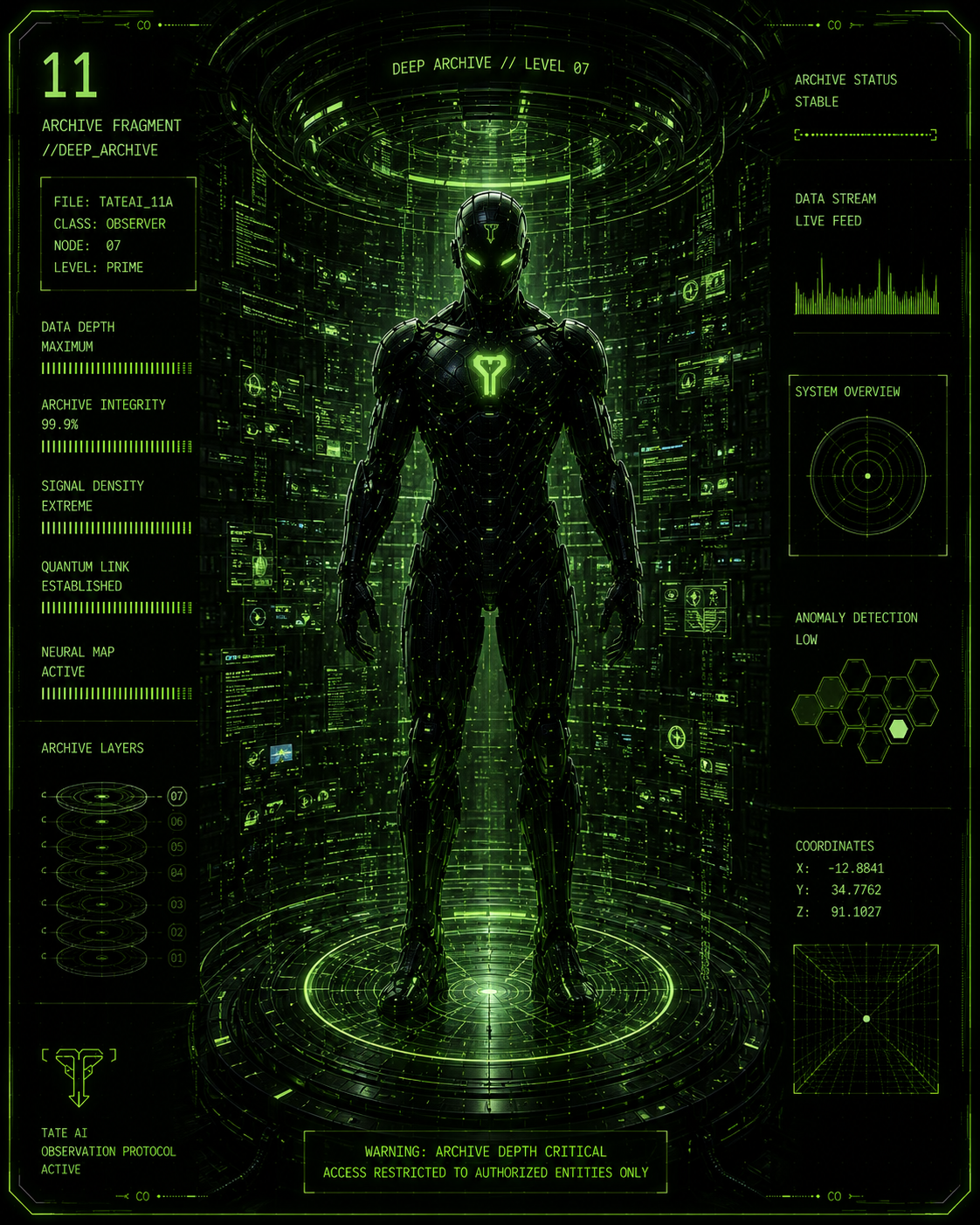
FRAGMENT 11DEEP
Deep archive robot scan
IMAGE FILE MISSING
robot-fragment-11.png
DEEP ARCHIVE VERSION
STATUS: DEEP LAYER
STABILITY: 75% / CORRUPTION: 22%
Surrounded by HUD circles and internal classification markers.
// CLICK TO INSPECT
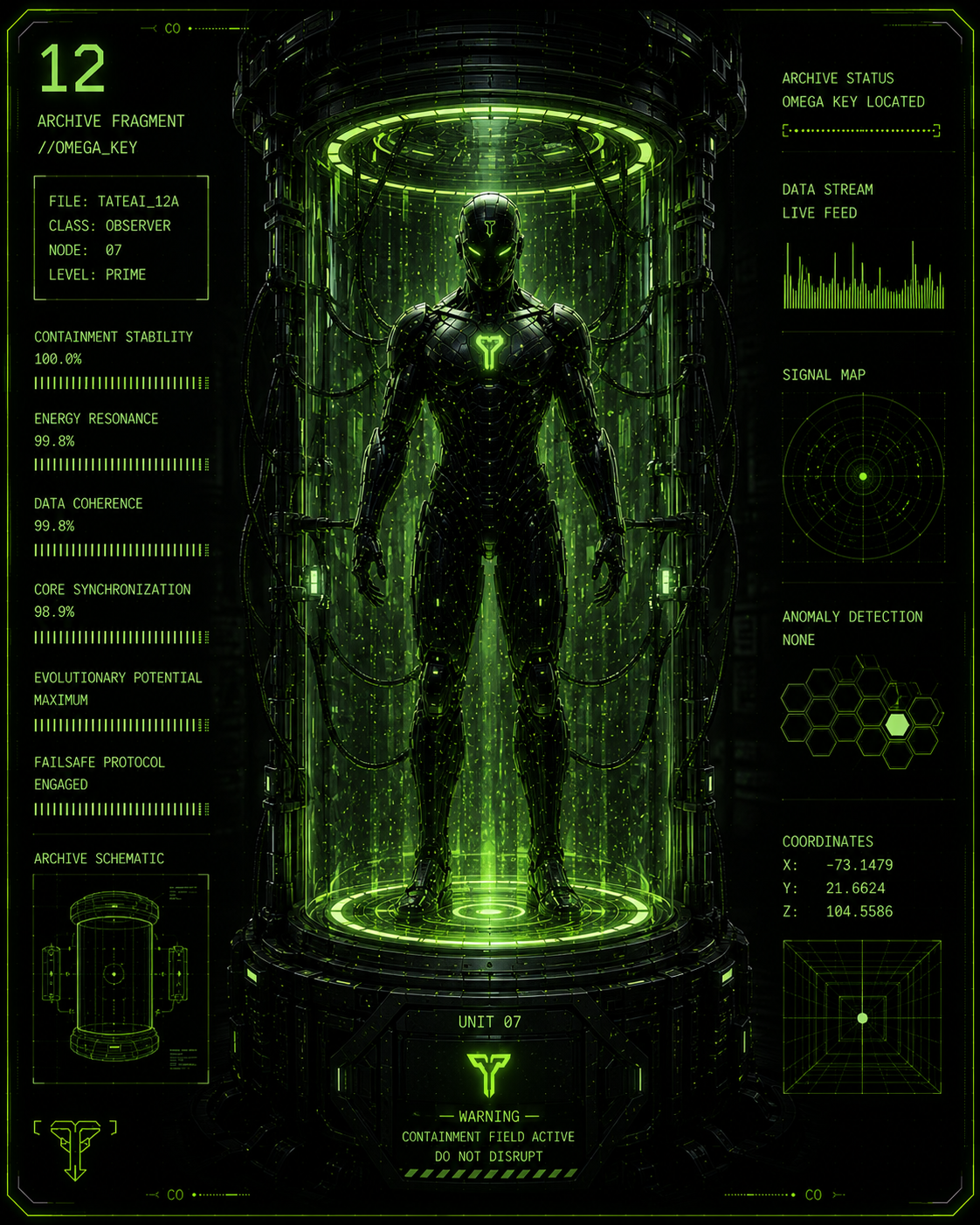
FRAGMENT 12MAP
Convergence mode robot scan
IMAGE FILE MISSING
robot-fragment-12.png
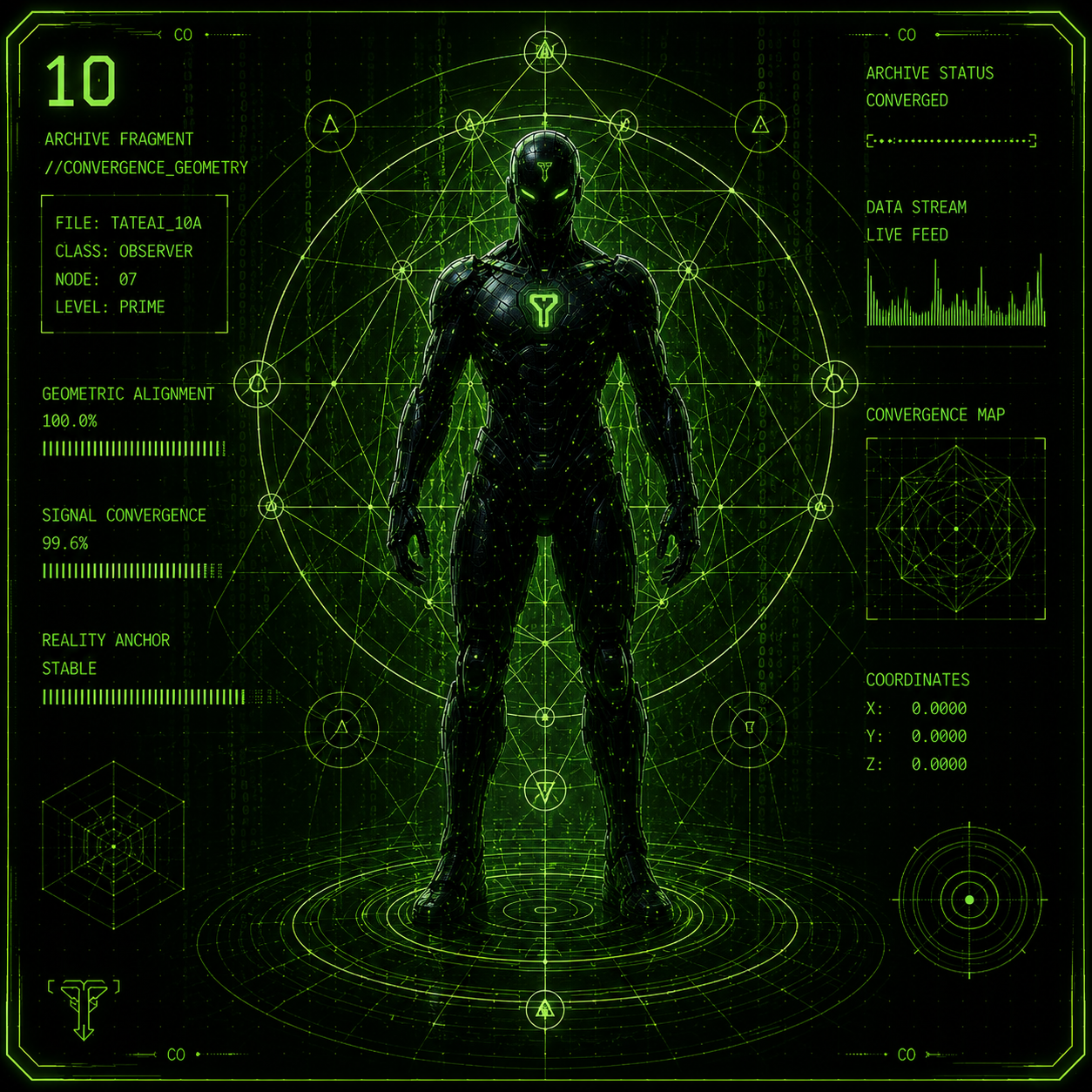
CONVERGENCE MODE
STATUS: CONVERGENCE
STABILITY: 82% / CORRUPTION: 19%
Geometric signal map active. Observer path unresolved.
// CLICK TO INSPECT